Maungdaw, Arakan State: Burma’s border security force (Nasaka), has been collecting money from sacrificial cattle since November 1, while villagers are bringing cattle to markets to sell and moving from place to place in Maungdaw Township, said an elder from the village who denied to be named.
“A group of Nasaka from Nari Bill out post camp, under the Nasaka area No. 6 of Maungdaw Township goes to a bridge from which villagers have to cross it to go other places or villages or markets. From this point, the Nasaka collects Kyat 8,000 per cattle while villagers passing with cattle.”
“They also rob the villagers who cross the bridge without finding any fault. But, Nasaka wants money from Rohingya community with any forms.”
The Eid-ul-Azha (a great festival for Muslim people) is to be celebrated on November 7, so the villagers (Rohingya) are busy to buy cattle or selling cattle. So they want to bring cattle from one place to another after crossing the said bridge. Taking this advantage, the said Nasaka personnel are collecting money from the cattle traders or owners or buyers illegally. They (traders, sellers, and buyers) had already paid money to the concerned authorities as a tax, or others, said a cow trader on condition of anonymity.
According to villagers, the price of the cattle is skyrocketed this year compare to last year due to scarcity of sacrificial animals.
The Maungdaw administration office ordered to Rohingya community to set up a market for their sacrificial animals between Myothugyi village and three miles station which is far from Maungdaw town and so town dwellers are facing difficulty to buy animals for sacrificial festival from that place. Last year, the market was set up near Myoma Kayandan village which is only one mile far from Maungdaw, said an elder from Maungdaw.
Friday, 4 November 2011


Two Nasaka personnel killed in Maungdaw south
Maungdaw, Arakan State: Two Burma border security force (Nasaka) personnel were killed by local Rohingya villagers of Done Pite ( Aung Deik Pyin) while trying to attempt to rape a girl at about 7:00pm on November 1, said an elder from the village.
“Three Nasaka personnel attacked a Rohingya girl – going to fetch water from a pond - to attempt to rape where another Rohingya girl informed to the villagers who beat the Nasaka personnel until they become unconscious.”
“Nasaka personnel who had an automatic rifle fled from the angry villagers and hid in a place till 11:00 pm for fear of beating and he reported to their camp number 18, under Nasaka area number 8.”
A group of Nasaka personnel went for searching two missing Nasaka personnel who had entered the village in the eve, found their dead bodies on the bank of the pond. Nasaka brought the dead bodies to their camp, said an aide from the Nasaka.
“The three Nasaka personnel are; Sergeant Myo Nay Htun, Private Sein Win and San Aye who had automatic rifle only. The three Nasaka personnel drank too much before entering the village and can’t able to control themselves.”
“We had given the statement that the village administration office didn’t able to mention anyone as the whole villagers involved in the event where the villagers had no intension to kill the Nasaka personnel, only to give punishment for attempting to rape,” said a village administration office member.
“In Rohingya tradition, all Rohingya females from village are fetching water from the pond/lake/River in the evening as a daily work in the rural areas. The three drunken Nasaka personnel who were entered the village to see village administration officer, met the females who were going to fetch water and changed their mind to attack the female with bad intention.”
“The villagers are fleeing from their village for fear of arrest by the concerned authority and go into hiding somewhere in Maungdaw south and the whole village is going to in panic. No one was arrested till now but the interrogation is going on.”
“Three Nasaka personnel attacked a Rohingya girl – going to fetch water from a pond - to attempt to rape where another Rohingya girl informed to the villagers who beat the Nasaka personnel until they become unconscious.”
“Nasaka personnel who had an automatic rifle fled from the angry villagers and hid in a place till 11:00 pm for fear of beating and he reported to their camp number 18, under Nasaka area number 8.”
A group of Nasaka personnel went for searching two missing Nasaka personnel who had entered the village in the eve, found their dead bodies on the bank of the pond. Nasaka brought the dead bodies to their camp, said an aide from the Nasaka.
“The three Nasaka personnel are; Sergeant Myo Nay Htun, Private Sein Win and San Aye who had automatic rifle only. The three Nasaka personnel drank too much before entering the village and can’t able to control themselves.”
“We had given the statement that the village administration office didn’t able to mention anyone as the whole villagers involved in the event where the villagers had no intension to kill the Nasaka personnel, only to give punishment for attempting to rape,” said a village administration office member.
“In Rohingya tradition, all Rohingya females from village are fetching water from the pond/lake/River in the evening as a daily work in the rural areas. The three drunken Nasaka personnel who were entered the village to see village administration officer, met the females who were going to fetch water and changed their mind to attack the female with bad intention.”
“The villagers are fleeing from their village for fear of arrest by the concerned authority and go into hiding somewhere in Maungdaw south and the whole village is going to in panic. No one was arrested till now but the interrogation is going on.”
Thursday, 3 November 2011
6P Amnesty and legalisation processes to run simultaneously
PUTRAJAYA (Nov 1, 2011): The government has decided that the amnesty and legalisation processes under the ‘6P Programme’ for illegal immigrant workers be carried out simultaneously.
Home Minister Datuk Seri Hishammuddin Hussein said today this was so that illegal immigrants wishing to return to their country of origin, can leave the country as soon as possible.
The ‘6P programme’ which was launched on July 11 comprises six processes – ‘Pendaftaran’ (registration) , ‘Pemutihan’ (legalisation), ‘Pengampunan’ (amnesty), ‘Pemantauan’ (supervision), ‘Penguatkuasaan’ (enforcement) and ‘Pengusiran’ (deportation).
Hishammuddin said the amnesty process involves two categories of illegal immigrants – those who had participated in the registration process which ended on Aug 31 and wished to leave this country immediately, and those who had surrendered voluntarily.
“Under this process, illegal immigrants can deal directly with the Immigration Department to obtain an Exit Inspection Memo to leave the country without any action being taken against them,” he said in a statement.
As of Oct 31, a total of 25,561 illegal immigrants had been granted amnesty and had left the country under the 6P amnesty.
The majority of them were from Indonesia (15,901 immigrants), India (2,501), Nepal (1,048), Myanmar (1,040) and Vietnam (930).
“The illegal immigrants who were granted amnesty had been screened and found to be free of any criminal record and were therefore allowed to return home with all the costs fully borne by the immigrants themselves,” he said.
“So far, the government has not had to provide any allocations to finance their repatriation, including cost of food and temporary lodging,” Hishammuddin said.
Meanwhile, he said as of Sunday, 27,514 illegal immigrants had been legalised to work for 2,208 employers throughout the country under the 6P Programme.
Through the 6P Programme, the government had succeeded in saving about RM3.3 billion in terms of gross expenditure to register 1,303,126 illegal immigrants which ended on Aug 31.
At the same time, he said, the government also managed to increase collection from the fees charged for levy, pass and visa imposed on the foreign workers who were given amnesty.
The 6P programme was aimed at gathering biometric data on the large number of illegal immigrants in the country to enhance management and law enforcement of foreign workers on a large scale.
A total of 2,320,034 immigrants comprising 1,016,908 legal workers and 1,303,126 illegal workers were biometrically registered during the registration stage which ended on Aug 31.
Indonesians made up the highest number of foreign workers here with 640,609 illegal workers and 405,312 legal workers; followed by Bangladeshis, numbering 267,803 illegal workers and 132,897 legal; and Nepalese 221,617 legitimate workers and 33,437 illegals.
 A file picture of Hishammuddin.
 Home Minister Datuk Seri Hishammuddin Hussein said today this was so that illegal immigrants wishing to return to their country of origin, can leave the country as soon as possible.
The ‘6P programme’ which was launched on July 11 comprises six processes – ‘Pendaftaran’ (registration) , ‘Pemutihan’ (legalisation), ‘Pengampunan’ (amnesty), ‘Pemantauan’ (supervision), ‘Penguatkuasaan’ (enforcement) and ‘Pengusiran’ (deportation).
Hishammuddin said the amnesty process involves two categories of illegal immigrants – those who had participated in the registration process which ended on Aug 31 and wished to leave this country immediately, and those who had surrendered voluntarily.
“Under this process, illegal immigrants can deal directly with the Immigration Department to obtain an Exit Inspection Memo to leave the country without any action being taken against them,” he said in a statement.
As of Oct 31, a total of 25,561 illegal immigrants had been granted amnesty and had left the country under the 6P amnesty.
The majority of them were from Indonesia (15,901 immigrants), India (2,501), Nepal (1,048), Myanmar (1,040) and Vietnam (930).
“The illegal immigrants who were granted amnesty had been screened and found to be free of any criminal record and were therefore allowed to return home with all the costs fully borne by the immigrants themselves,” he said.
“So far, the government has not had to provide any allocations to finance their repatriation, including cost of food and temporary lodging,” Hishammuddin said.
Meanwhile, he said as of Sunday, 27,514 illegal immigrants had been legalised to work for 2,208 employers throughout the country under the 6P Programme.
Through the 6P Programme, the government had succeeded in saving about RM3.3 billion in terms of gross expenditure to register 1,303,126 illegal immigrants which ended on Aug 31.
At the same time, he said, the government also managed to increase collection from the fees charged for levy, pass and visa imposed on the foreign workers who were given amnesty.
The 6P programme was aimed at gathering biometric data on the large number of illegal immigrants in the country to enhance management and law enforcement of foreign workers on a large scale.
A total of 2,320,034 immigrants comprising 1,016,908 legal workers and 1,303,126 illegal workers were biometrically registered during the registration stage which ended on Aug 31.
Indonesians made up the highest number of foreign workers here with 640,609 illegal workers and 405,312 legal workers; followed by Bangladeshis, numbering 267,803 illegal workers and 132,897 legal; and Nepalese 221,617 legitimate workers and 33,437 illegals.
M'sia-Aussie deal failure cause of boat deaths, says Bowen
MELBOURNE (Nov 2, 2011): Australia’s Immigration Minister Chris Bowen said the drowning deaths of 27 asylum-seekers yesterday could be linked to the collapse of the Malaysia refugee swap deal.
He said the Malaysia deal was designed to do "exactly" that, "creating safer pathways, increasing the humanitarian intake", The Age newspaper quoted the minister as saying.
Bowen told ABC Radio today he had argued consistently that if the Malaysia deal was blocked, there would be more deaths at sea.
"I've never been more disappointed to be proven right. This is a terrible tragedy but it's a fact that when you've more boats coming to Australia, you'll see more deaths.
"We didn't adopt the Malaysia arrangement because it was politically easy or it was convenient, quite the opposite.
"We adopted it because we knew that this was the sort of arrangement that was necessary, to prevent more deaths at sea, and that's exactly what we've seen," he said.
However, he stopped short of openly blaming the opposition which has refused to pass legislation to overcome the court ban on the Malaysia swap deal in Parliament.
Bowen also said the arrival of another boat carrying 92 asylum seekers off Christmas Island yesterday, the sixth since the policy shift to onshore processing, showed there had been an "uptake of boat arrivals" since the Malaysia deal collapsed, which the government had also predicted.
Opposition immigration spokesman Scott Morrison said the government could have its legislation clear Parliament if it accepted opposition amendments.
But, he refused to blame government policy for the drowning deaths. "It's unhelpful to engage in that sort of rhetoric," he told ABC Radio, adding that criminal people smugglers were to blame.
 A mugshot of Bowen. AUSTRALIA HOUSE OF REPRESENTATIVES
He said the Malaysia deal was designed to do "exactly" that, "creating safer pathways, increasing the humanitarian intake", The Age newspaper quoted the minister as saying.
Bowen told ABC Radio today he had argued consistently that if the Malaysia deal was blocked, there would be more deaths at sea.
"I've never been more disappointed to be proven right. This is a terrible tragedy but it's a fact that when you've more boats coming to Australia, you'll see more deaths.
"We didn't adopt the Malaysia arrangement because it was politically easy or it was convenient, quite the opposite.
"We adopted it because we knew that this was the sort of arrangement that was necessary, to prevent more deaths at sea, and that's exactly what we've seen," he said.
However, he stopped short of openly blaming the opposition which has refused to pass legislation to overcome the court ban on the Malaysia swap deal in Parliament.
Bowen also said the arrival of another boat carrying 92 asylum seekers off Christmas Island yesterday, the sixth since the policy shift to onshore processing, showed there had been an "uptake of boat arrivals" since the Malaysia deal collapsed, which the government had also predicted.
Opposition immigration spokesman Scott Morrison said the government could have its legislation clear Parliament if it accepted opposition amendments.
But, he refused to blame government policy for the drowning deaths. "It's unhelpful to engage in that sort of rhetoric," he told ABC Radio, adding that criminal people smugglers were to blame.
Income tax officer collects double tax from old vehicles’ owners in Maungdaw
Maungdaw, Arakan State: The income tax officer is going to collect double tax from old vehicles’ owners in Maungdaw since October 31, said a vehicles’ owner.
“The new civilianized government had announced to hand over the old vehicles to the authority and will issue a permit to import a new vehicle but in Maungdaw and Buthidaung most of the owners of old vehicle are Rohingya community and not able to hand over the old vehicles in Akyab for restriction of movement.”
“The old vehicles’ owners from northern Arakan were sold their old vehicles to Rakhine community from Akyab who are working on this business.”
The Maungdaw income tax office issued a letter to all the old vehicles’ owners to meet the officer on October 31, where the Assistant income tax officer Sein Shin asked the owners to pay sell tax who sold their vehicles, said an officer from income tax office of Maungdaw.
“The sale tax was paid by Rakhine who bought the vehicles from Rohingya and paid tax in Akyab before they handed over the vehicles to authority to get a permit to import a new vehicle.”
“Usually the sale tax is paid by buyer not from seller.”
Now the Maungdaw income tax officer is asking again sale tax from Rohingya old vehicles’ owners which made the Rohingya community uneasy in their business, said an old businessman from Maungdaw.
“The old vehicles are very old which was used in the World War II and the Rohingya are keeping this kind of vehicles for transport in northern Arakan.”
“The new civilianized government had announced to hand over the old vehicles to the authority and will issue a permit to import a new vehicle but in Maungdaw and Buthidaung most of the owners of old vehicle are Rohingya community and not able to hand over the old vehicles in Akyab for restriction of movement.”
“The old vehicles’ owners from northern Arakan were sold their old vehicles to Rakhine community from Akyab who are working on this business.”
The Maungdaw income tax office issued a letter to all the old vehicles’ owners to meet the officer on October 31, where the Assistant income tax officer Sein Shin asked the owners to pay sell tax who sold their vehicles, said an officer from income tax office of Maungdaw.
“The sale tax was paid by Rakhine who bought the vehicles from Rohingya and paid tax in Akyab before they handed over the vehicles to authority to get a permit to import a new vehicle.”
“Usually the sale tax is paid by buyer not from seller.”
Now the Maungdaw income tax officer is asking again sale tax from Rohingya old vehicles’ owners which made the Rohingya community uneasy in their business, said an old businessman from Maungdaw.
“The old vehicles are very old which was used in the World War II and the Rohingya are keeping this kind of vehicles for transport in northern Arakan.”
Wednesday, 2 November 2011
Suu Kyi and Minister Aung Kyi meet for fourth time
(Press Conference) – Burma’s opposition leader Aung San Suu Kyi and Union Minister Aung Kyi met on Sunday at a government guesthouse to discuss a prisoners’ amnesty, establishing peace in ethnic areas and economic and financial issues. After the meeting, Minister Aung Kyi read a joint statement and they answered questions from reporters. The following is a translation of the joint statement and the question-and-answer session.

In accordance with the invitation by the government of the Republic of the Union of Myanmar Aung San Suu Kyi met with Union Minister Aung Kyi at Sane Lae Kan Thar State guesthouse from 13:00 p.m. to 13:55 p.m. on October 30, 2011. During the meeting, we discussed the situation in national affairs, free trade, economic development and the importance of a free cash flow. We also discussed efforts by the state to establish permanent peace with ethnic armed groups, the development of peace talks and a prisoner amnesty. We agreed that the meetings would continue. That’s all.
Question. Aung Hla Tun (Reuters)
Answer: I would like to ask Ma Ma Suu [Suu Kyi]. We recently saw some small constructive developments in Burma’s current politics. For instance, the granting of amnesty to some political prisoners and also allowing workers’ organizations to organize and stage demonstrations. The latest development is [a bill]amending the Political Parties Registration Law. Are those changes sufficient to re-register the NLD as a political party? A: Suu Kyi: The fact whether our party, the NLD, will register depends on the law. It’s a matter that we can talk about only after the law is approved [in Parliament]. When the law is approved, we will meet according to the party’s policies and make a decision.
Q: Aung Hla Tun (Reuters): We already know the law’s three main points. I think the legal experts of the NLD also know about it.
A: Aung San Suu Kyi: Yes, But, we are exact. We can talk about it only after we see the law. Before we see the law, we cannot say.
Q: Tin Maung Aye (Asahi Shimbun): The minister and Aung San Suu Kyi have met four times. Mostly, we know that you will cooperate. Could you tell me in what areas and how you will cooperate in detail, please?
A: Aung Kyi : We issued a statement in August. It said we agreed that we would cooperate for not only the development of democracy and but also in politics, economics and social affairs. I think that is a fairly comprehensive solution.

Q. Kyaw Swa Min (Yangon Times): In this meeting, did Aung Kyi and Aung San Suu Kyi discuss the matter regarding re-registration of the NLD, more amnesty and and holding a meeting between Aung San Suu Kyi and the president?
A: Aung San Suu Kyi: We discussed all of those matters. Every time we meet, we discuss those matters. Because, they are related with our reconciliation.
Q. Aye Aye Win (AP): Could you please tell me a little about your discussion on financial affairs? Is it related to the IMF or similar issues?
A: Aung Kyi : We have talked about it recently. If you read carefully, you’ll see. The importance of cash flows and spending covers many things.
Q. (A reporter): Does the government have a plan to release political prisoners soon?
A: Minister Aung Kyi: When we take an action, we usually do it step-by-step. As all of you know, we will not make a [big] jump. But, we will not stop. Thanks to all of you.
Minister Aung Kyi read the joint statement
In accordance with the invitation by the government of the Republic of the Union of Myanmar Aung San Suu Kyi met with Union Minister Aung Kyi at Sane Lae Kan Thar State guesthouse from 13:00 p.m. to 13:55 p.m. on October 30, 2011. During the meeting, we discussed the situation in national affairs, free trade, economic development and the importance of a free cash flow. We also discussed efforts by the state to establish permanent peace with ethnic armed groups, the development of peace talks and a prisoner amnesty. We agreed that the meetings would continue. That’s all.
Question. Aung Hla Tun (Reuters)
Answer: I would like to ask Ma Ma Suu [Suu Kyi]. We recently saw some small constructive developments in Burma’s current politics. For instance, the granting of amnesty to some political prisoners and also allowing workers’ organizations to organize and stage demonstrations. The latest development is [a bill]amending the Political Parties Registration Law. Are those changes sufficient to re-register the NLD as a political party? A: Suu Kyi: The fact whether our party, the NLD, will register depends on the law. It’s a matter that we can talk about only after the law is approved [in Parliament]. When the law is approved, we will meet according to the party’s policies and make a decision.
Q: Aung Hla Tun (Reuters): We already know the law’s three main points. I think the legal experts of the NLD also know about it.
A: Aung San Suu Kyi: Yes, But, we are exact. We can talk about it only after we see the law. Before we see the law, we cannot say.
Q: Tin Maung Aye (Asahi Shimbun): The minister and Aung San Suu Kyi have met four times. Mostly, we know that you will cooperate. Could you tell me in what areas and how you will cooperate in detail, please?
A: Aung Kyi : We issued a statement in August. It said we agreed that we would cooperate for not only the development of democracy and but also in politics, economics and social affairs. I think that is a fairly comprehensive solution.
Aung San Suu Kyi and Union Minister Aung Kyi at a press conference at Sane Lae Kan Thar State guesthouse in Rangoon on October 30, 2011. Photo: Mizzima
Q. Kyaw Swa Min (Yangon Times): In this meeting, did Aung Kyi and Aung San Suu Kyi discuss the matter regarding re-registration of the NLD, more amnesty and and holding a meeting between Aung San Suu Kyi and the president?
A: Aung San Suu Kyi: We discussed all of those matters. Every time we meet, we discuss those matters. Because, they are related with our reconciliation.
Q. Aye Aye Win (AP): Could you please tell me a little about your discussion on financial affairs? Is it related to the IMF or similar issues?
A: Aung Kyi : We have talked about it recently. If you read carefully, you’ll see. The importance of cash flows and spending covers many things.
Q. (A reporter): Does the government have a plan to release political prisoners soon?
A: Minister Aung Kyi: When we take an action, we usually do it step-by-step. As all of you know, we will not make a [big] jump. But, we will not stop. Thanks to all of you.
US special representative to Burma Derek Mitchell
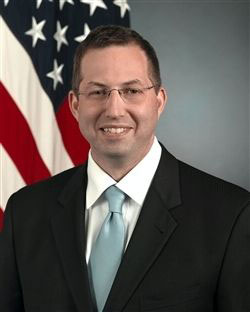
US special representative to Burma Derek Mitchell
New Delhi (Mizzima) – Derek Mitchell, the U.S. Special representative and policy coordinator for Burma, and Michael Posner, an assistant secretary of state, will arrive in Burma on Tuesday.
It is Mitchell’s third visit to Burma within two months, and the first visit for Posner, the assistant secretary of state for the Bureau of Democracy, Human Rights and Labour.
“We have an appointment at 11 a.m. at the [U.S] embassy,” National Democratic Force [NDF] leader Khin Maung Swe told Mizzima on Monday.
On the four-day visit, the U.S. officials will meet with Burmese government officials, political parties including the NDF, National Unity Party [NUP], Democratic Party (Myanmar) and social organizations.
During the meeting, the NDF said it would ask about the U.S. officials’ opinions regarding ways to seek peace inside Burma.
“We will talk about affairs regarding peace because peace is important. Without peace, business cannot be conducted,” NDF leader Khin Maung Swe told Mizzima.
Party officials would also ask about economic sanctions against Burma, he said.
Presently, the U.S. government balances its economic sanctions policy with a policy of engagement and dialogue with the new Burmese government.
The U.S. has urged the new government to release all political prisoners, to hold a tri-partite political dialogue toward national reconciliation and to allow international aid to reach civil war refugees.
NUP spokesman Han Shwe said: “If the U.S. representatives come to Burma frequently for discussions, they will come to understand our country’s conditions and then sanctions are likely to be lifted gradually.”
He said the NUP accepted that democratic change was underway in Burma, and it [NUP] would talk about democracy, human rights and workers’ affairs in the meeting with U.S. officials.
On the other hand, the Democratic Party (Myanmar) noted that although there have been democratic changes in Burma, the process has been slow and there are still human rights violations throughout the country. Thu Wai, the chairman of the Democratic Party (Myanmar), will also attend the meeting with U.S. officials.
Than Than Nu, the secretary of Democratic Party (Myanmar), said: “They are trying to bring about change. Bur, some processes can be delayed. Some things have been implemented partially. In the past, all political parties could form their own workers’ unions and farmers’ unions. Now, we can’t. So, democratic changes have not been well made.”
U.S. officials also plan to meet with National League for Democracy (NLD) leaders, but the date has not been set.
Ohn Kyaing, the NLD spokesman, told Mizzima the NLD will talk about establishing democracy, human rights and political prisoners.
Derek Mitchell’s last trip to Burma was on October 24.
Subscribe to:
Posts (Atom)
About Me

- The Voice Of Rohingya
- Maung daw, Arakan state, Myanmar (Burma)
- I am an independent man who voted to humanitarian aid.