Friday, 11 May 2012

Rohingya become landless, face starvation in Arakan State

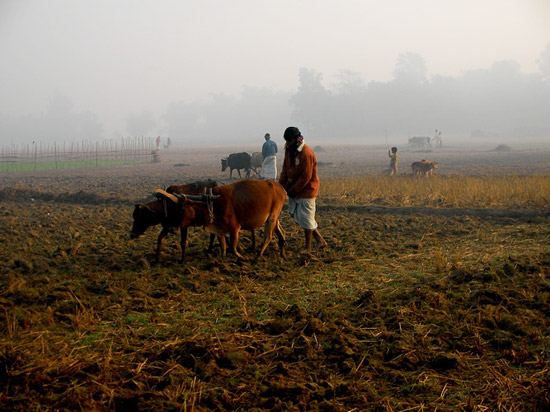
Hussain (not his real name), 50, lives in Bogri Chang village-tract, Buthidaung, in Arakan State, western Burma. He and other Rohingya have been facing difficulty growing paddy and other essential crops because of confiscation of their lands by Burmese authorities.
Lands 
belonging to Rohingya villagers in Arakan State are routinely 
confiscated by the Burmese military
Lands belonging to Rohingya villagers in Arakan State are routinely confiscated by the Burmese military
Hussain recently told Kaladan News that his lands were confiscated by Military Battalion No. 552 of Thanganet, under Taung Bazar area, Buthidaung Township, in June 2011.
“Seven out of our 32 acres of farmland were seized from me and my family by the personnel of Battalion No. 552.”
“After seizing the land, the military planted rubber saplings on our land without giving any compensation to us, even though there is plenty of wild land suitable for turning into rubber plantations.”
“I have eleven family members, including three sons and six daughters. My eldest son has just completed matriculation from Taung Bazar High School. However, I can’t afford to send my son for higher studies at Akyab (Sittwe) University because of our family’s financial situation.”

Hussain is a teacher at a local Islamic religious school (Madrasa), and he receives only 10,000 Kyat support from the Madrasa per month, which is not enough to sustain his family. The Madrasa is administered by local villagers, and there is little prospect that they will be able to increase the amount of support, he said.
“The authorities impose various kinds of restrictions on the Arakanese Rohingya, including restriction of movement. If anyone wants to go from one place to another, he/she needs to apply for a travel pass from the local Nasaka authority.”
Like Hussain, many Rohingya’s lands have been confiscated and handed over to make homes for Natala settlers, ‘model villagers’ who are encouraged to settle in northern Arakan State from other areas in Burma. The authorities also build Buddhist pagodas on the confiscated lands.
In the winter months, Rohingya farmers traditionally cultivate betel leaves on their lands in Bogri Chang village, but the captain of Military Battalion No. 552 has begun extorting Kyat 40,000 to 50,000 per acre from local farmers, said another villager on condition of anonymity.
If any farmer is unable to pay money to the captain, his betel farm will be destroyed by the army, the villager said.
Some of the betel farm owners who have lost their farmlands include Abu Sayed (50), Mohamed Siddik (53), and Hussain Ahamed (33). Their betel fields were destroyed during the third week of October 2011 because they were unable to pay money to the military officer. They all belong to the said village.
“Now, they are facing many difficulties to support their family members, as they have no alternative earning sources.”
“Besides, the streams or brooks where water comes out from mountain walls are also controlled by Army Battalion No. 552. During winter, some Rohingya farmers want to grow extra paddy, but they have no lands to cultivate because so much land near the mountain areas has been confiscated by the army. The military earns money by leasing these lands back to Rohingya farmers for Kyat 15,000 per acre.
Another Rohingya villager in Bogri Change named Nurul Haque (55) was the owner of seven acres of farmland, but all of his land was confiscated by the military in 2010. Currently, he is landless and very poor. He and his older children struggle to find ways to support the eight-member family, said a local elder who declined to be named.
“Just a few months ago, Nurul Haque’s eldest son went to a nearby mountain to collect firewood, but on his way home he was halted by military personnel who seized all of his firewood. So, his son could not sell it, and therefore had no money to purchase food, so all the family members starved that night.”
“Like Nurul Haque’s family members, many Rohingya people are starving because of the army.”
Rohingya minority people do not have citizenship status in Arakan State. They often lack access to basic public services, including health, sanitation, and education, sources said.
Between 1991 and 1992, over 250,000 Rohingya refugees arrived in neighboring Bangladesh because of religious and political persecutions, and other human rights abuses in their homeland, such as forced labor, restrictions on movement, marriage, and education, as well as land confiscation, arbitrary arrest, and extortion.
“We Rohingya hoped to get some concessions from Burmese authorities after the 2010 elections, including freedom of movement, access to medical facilities, education facilities, and the equal rights enjoyed by other ethnic groups,” a former Rohingya politician said in a recent interview.
The politician said that he is concerned about the future of the Rohingya in Arakan State as many forms of harassment and human rights abuses continue unabated more than one year after President Thein Sein’s nominally civilian-led government took office.

Why Rohingyas flee to abroad by sea route

Thirty year-old Ahmed (not his real name), is a Rohingya refugee. He and other refugees fled to Malaysia by the dangerous sea route frequented by Rohingya boatpeople, leaving from Bangladesh. They sought a better life after more than 20 years living in squalid conditions  in small sheds in Bangladesh refugee camps, with no official status with the UNHCR and Bangladesh authorities,
Ahmed was interviewed by Kaladanpress over the telephone from Malaysia.
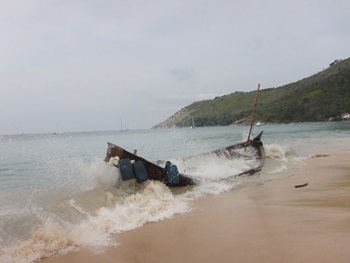
boat_damaged_in_Thailand_coast“I lived with my parents and wife in a small shed at Nayapara, an official Refugee Camp under the supervision of the UNHCR and the Bangladesh authorities,” he said.
“I got married at Nayapara camp on the first week of November 2010. I left for Malaysia leaving my wife with my parents in the camp. I have no children.”
He said he and sixty- five boatpeople from Nayapara and Kutupalong camps left for Malaysia from Chittagong in the third week of October 2011 at about 11: pm.
“I gave 40,000 taka to a broker (agent) in Bangladesh to send me to Malaysia or the Thailand border.”
Amhed managed to raise this money by selling his wife’s jewelry.
He had been hopeful for a good life abroad for he and other refugees when the resettlement program was started by the United Nations High Commissioner for Refugees (UNHCR) in 2006. Unfortunately, the resettlement program was halted by the Bangladeshi authorities in 2010 for unknown reasons.
On the perilous journey out of Bangladesh they spent two days and two nights drifting in the Bay of Bengal, in Bangladesh territorial waters, because the boat engine gave them trouble.
The engine was finally repaired by a boatman who was one of the leaders among the  boatpeople, Ahmed said.
“We cooked rice ourselves in the boat, but we could not take a bath because of the salt water.”
They took rations for 7 days, such as rice, Sura (flatted rice), molasses, biscuits, dried fish, potato and water.
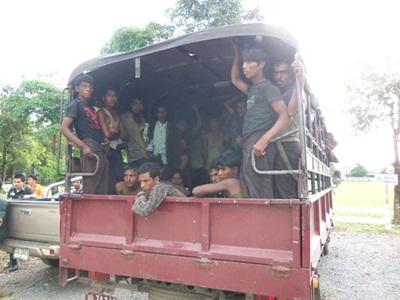
boatpeople_carried_to_police_stationUnfortunately, they ran out of food after being buffeted by strong winds off the coast of Thailand and floated around for an extra 2 days.
After nine days, they reached the coast of Thailand at night. They stayed one night in the jungle but didn’t know the name of place. They didn’t have any food, Ahmed said.
“However, the next morning we were apprehended by Thai authorities and sent to a police station for questioning. Thai police gave us food at noon. We were kept one night in police custody,” another boatman said.
“Police asked many questions, especially why we left from Burma and Bangladesh.
We replied that the situation in Arakan State is not good. The Rohingya people can’t move from one place to another without travel passes, restrictions on movement, marriage restrictions, forced labor, arbitrary arrest, extortion and being denied citizenship rights by the military and government. The situation is also not suitable for us   in the Bangladesh refugee camps. The official refugee can’t go outside of the camp without permission. We faced arbitrary arrest, and were harassed by the camp authorities. So, we fled abroad for a better life.”
The next day they were handed over to Thai immigration which sent them back to Burma by boat, according to the boatman.
However, they were rescued by a fishing boat from Burma, which brought them to the Malaysia-Thailand border, at Badam Musa, a main border crossing into Malaysia, Ahmed said.

He and others crossed into Malaysia from the border after giving Taka 90,000 to a broker.
Ahmed’s troubles are not over, however. He can’t work openly for fear of arrest by the Malaysian government, because he is an illegal immigrant. He applied to the UN office at Kula Lumpur for refugee status, recently.
According to sources, many unofficial refugees from Leda (Tal) and Kutupalong makeshift camps also went to Malaysia.
A village elder from Arakan State said many Rohingya youths, between 13 and 20, went to Malaysia from  the villages of Myint Hlut and Aley Than Kyaw of Maungdaw Township, as well as other villages, by boat and  many boatpeople died in the Bay of Bengal  on the way.
The village elder also said the Rohingya people hoped the situation in Burma’s northern Arakan State would be changed after the 2010 elections. However, human rights abuses and discrimination are going on against the Rohingya people, so the situation is actually becoming worse day-by-day there. As result, Rohingya people continue to leave their motherland.
According to different sources, many Rohingya boatpeople were arrested by Thai authorities since August 2011. Mostly, they were released.
In 2007 and 2008, almost 5000 men and boys from Burma’s Rohingya Muslim minority landed on Thailand’s shores, prompting a change in policy to try to prevent such a large influx from occurring again. Revelation of the push-back policy, in which Thai authorities apprehended Rohingya boatpeople, then towed them back out on the open sea in secrecy, shocked observers. That inhumane treatment was brought to a swift end after  journalists, working with the Hong Kong-based South China Morning Post newspaper, exposed what was happening.
Ahmed would like to urge the Malaysian government not to arrest oppressed Rohingya people and other ethnic minorities who left their motherland because of discrimination and human rights abuses against them by the military-controlled government in Burma. He also urges the UN to provide refugee status in Malaysia to illegal Rohingya people as early as possible, to guarantee  their safety.

USDP campaigns for next election in Maungdaw

Maungdaw, Arakan State: The regional in-charge of Arakan state and two members of Parliament from Union Solidarity and Development Party (USDP) are going to organize the people of Maungdaw to support their party in coming next election at 2015 today, according to a politician from Maungdaw.

“The organizing group is Maung Oo, the regional in-charge of USDP  in western Burma's Arakan State and its two Parliament  members- U Aung Zaw Win and Htay win- who  arrived in Maungdaw yesterday at about 4:45pm from Akyab.”

“The organizing group went to the Alay Than Kyaw in the morning  today and returned back to Maungdaw where they held public meeting in Alay Than Kyaw in Maungdaw south and Myoma Kyayoungdan village in Maungdaw.”

In the meeting, “the people of Maungdaw are most persecution and more getting troubles in Burma. I understand your feeling and now I promised you that you will not feel as before. I, on behalf of USDP, will try to fulfill all your demand within 2015. If we are not fulfill your demand within this period, you will not support to us in coming next election,” according to U Maung Oo speech to the public.

“We will issue the National Identification Card -pink color card- to all who live here and we  will also remove the restriction on the building /repairing the religious building; marriage and movement. We will give to access the education on your qualification- medical, engineer and others which are not include in Akyab University,” U Maung Oo said in the meeting.

“How you identify to us, we prefer ourselves as Rohingya,” asked a participant in the meeting in Myoma Kyayoungdan village, but, U Maung Oo did not reply on this question, said an elder from Maungdaw who participant in the meeting.

In the other hand, U Htun Hla Sein ,the secretary of USDP Maungdaw office called all the members from Maungdaw on May 7 for discussion about visiting USDP organizing group to the town. He said at the meeting, Rohingya and Kala are not living in Burma. If you want more facility other ethnics, don’t use this word and follow the statement of government, according to a student who attend the meeting.

“Most of Rohingya especially young people left the meeting and the executive committee of USDP ( Rohingya) had tried to convince the young group who boycotted the meeting to say “Burmese Muslim” instate of “Rohingya”. The Rohingya community needs to enjoy with Rohingya ethnicity not Burmese Muslim.”

“We will not stay as a member of USDP if the party refused us as a Rohingya,” said a young student who is a member of USDP

Tuesday, 8 May 2012

Nasaka arrests, extorts money from Rohingya

Maungdaw, Arakan State: Burma’s border security force (Nasaka) arrested two Rohingya women and extorted Kyat 300.000 for release on April 30, in Maungdaw north, Arakan State, Burma, said a close relative from the locality on condition of anonymity.

“The Camp-in-Charge U Myo Than and three Nasaka personnel from Aung Mingala Nasaka camp of Maungdaw township accompanied by local village administration officer Dil Mohamed went to the house of Ms Lalu (alias) Ms Nurkis ( 45) of Maung Nama village of Maungdaw Township where the Nasaka arrested her with her nephew Ms Noor Banu (20), on April 30 at mid-night.”

“The Nasaka accused with allegation of not informing the concerned authority about visiting gust at her resident.”

“We had informed about Ms. Noor Banu’s visiting with her white card –issue by government to Rohingya community instate of pink card for Burmese citizen - to the village administration office, but the Nasaka asked for travel pass from village which is only 2 miles from the said village – Naribill  and Maung Nama village,”

There is no need to obtain travel pass from village as Nasaka Director Col. Aung Gyi passed an order of new travel policy- can travel without village travel pass within township, but need Identification Card (white card) - for Rohingya community while he met with  Rohingya leader on April 21, said a schoolteacher from the locality. “The accusation is only to extort money from Ms.Nurkis as her husband – Zawlil Ahmed - is working in Kingdom of Saudi Arabia.”

“Nasaka and village chairman targeted the women whose husbands are in foreign countries. If the women are threatened by any means by giving any allegation, they (Nasaka) will get money from them.”

“The intention of the Nasaka and village administration officer is to extort money from them and to insult them if they get opportunity and wants to flee them from the motherland, said a village elder who denied to be named.

“Earlier, the Nasaka also committed such kinds of crimes, but the local concerned officers did not take any action against the culprits, so that these kinds of crimes can be increased in future and the Muslim Rohingya will become more and more victims and at last they will flee from Arakan to neighboring countries with unbearable persecutions.” 

“These kinds of occurrences make local Rohingya people demoralized and push them into poverty line. Rohingya people have to sell their property such as ---lands, gold ornaments and cattle--- with throwing price to fulfill the authority’s demand.”

After the new government of President Thein Sein, Rohingya people believe that arbitrary harassments against the Rohingya community by police, Nasaka and army will be decreased, but, increases day by day, said a local woman who preferred not to be named.

When connected the village administration officer, Dil Mohamed, the agent of Nasaka and U  Myo Than , the Nasaka officer, but no response.

Human trafficking control office extorts money in Maungdaw

Maungdaw, Arakan State: The Human trafficking control office has been going to extort money from Rohingya families whose beloved person is living in the foreign countries, said an officer from village administration office of Maungdaw.

“Police Inspector U Aung Saw, the head of the Human trafficking control office is always visiting the Rohingya villages where he forced the village administration officer to share the information about the families whose beloved person is living in the foreign countries to serve their family from those countries.”

“The human trafficking control officer  seized the family list of those beloved one live in the foreign countries with help of village administration officer and summoned the family head to his office situated in Myoma Kyayoungdan village of Maungdaw. “

The officer extorted money from those whose Rohingya families when he returned the family list. He demanded 100000 - 300000 kyats per family, said a school teacher whose son was living in Malaysia. “Sometime, he extorted  huge money from family when he know that family are rich.’

“The officer has no right to seize the family list and rights to inform to the concerned authority –Immigration- to follow the case which will file in the Human trafficking control office.”

The officers is only looking how to extort money from Rohingya community like other authority – Burma border security force (Nasaka), Police, Immigration and Military Intelligent- and he never informed to the concerned security force - Nasaka- about following trafficking case in the area, said an officer from Maungdaw.

“In Maungdaw, not Rohingya are going to foreign countries but Rakhine community also going to foreign countries. The officer only asked the Rohingy community not Rakhine community.”

“The officer has to follow the case to control trafficking and how the Rohingya left from tight security area of Maungdaw  by boat to Malaysia. The Nasaka security force is helping the Rohingya to operate the boat from Maungdaw through their agent by taking money. Why the officer is not going to ask the Nasaka area officer from where the boat people left?” said an elder from Maungdaw.

Monday, 7 May 2012

Rohingya in India seeks refugee status

Hundreds Rohingya men, women and children from Burma, belonging to Burmese Rohingya community – Muslim community- have made temporary sheds of polythene sheets by the rear compound wall of the UNHCR office in B-2 Block of Vasant Vihar in south Delhi since April 9, seeking refugee status, according to Mamoon Rafique, one of the protesters - originally a resident of Mangdaw district of Arakan region and now working as teacher in Jammu.
Mamoon Rafique, an asylum seeker in India

“The UNHCR officials are discriminating against us because we are Muslims. Non-Muslim asylum-seekers – Chin, Rakhin, Kachin and others - from Myanmar get their refugee status card within months or even days but we are being kept waiting for years. Instead of proper refugee cards, we are being issued cards which say that we are ‘asylum seekers’ and even this card is issued without our father’s name and address.”

“The UNHCR cards which were given to us were no use as we could not seek admission into any school for our children or get employment for ourselves while in India.”

“We will not leave here till we are recognized as refugees,” said Shamsul Alam, another protester

“I came from Maungdaw. I fled from the Burmese government’s human rights abuses and formerly lived in Bangladesh. Later, we moved to India because we believed that this is a democratic country with sympathy and peace, where we can take refuge. If we cannot live here as refugees, we want to go to another country where we can live as refugees.”
Hundreds Rohingya men, women and children of Rohingya community from Burma have made temporary sheds of polythene sheets by the rear compound wall of the UNHCR office in B-2 Block of Vasant Vihar in south Delhi
"We were issued an asylum seeker card in August 2011 by the UNHCR, but it deprives us from lot of facilities that a refugee would get. We want a refugee card. Our children need education, better living conditions like water to drink and toilets. But we are deprived of this as we don't have a refugee card," said Zia-ul-Rahman, a asylum seeker and now lives in Muzaffarnagar, Uttar Pradesh.

"We don't use the term Rohingya - we refer to this group as Muslims from northern Rakhine state. In India, there is no national legal framework for refugees, and because of this there are different approaches to different groups of people," Nayana Bose, associate external relations officer UNHCR, told IANS.

"We have already registered around 1,800 Rohingya as asylum seekers In India and issued identity cards to each one. The card is similar to the refugee card as it helps to protect them from harassment, arbitrary arrest, detention and expulsion, and to prevent them from being forced back to a country where their life or freedom may be in danger," Bose said.

“As for right to health care and education, this is available for everybody. They can access free education at government schools.”

However, the UNHCR officials say that they discussed the issue with the refugees four to five times, but were not persuaded by their arguments and will meet 10 representatives of the community again on May 20.

Around 10 to 15 thousand Arakanses Muslims - Rohingya community - are living in different parts of India at present where some of our people are incarcerated in Andaman jail, according to Mamoon while interview to Milli Gazette.

“We are on the edge of starvation due to the apathy of UNHCR towards our plight. We are living on the food offered to us by the local Muslims from across the road and are deprived of basic amenities and medical facilities.”

Strong wind and heavy rain left hundreds of refugee homeless

Kutupalong, Bangladesh: More than hundred huts had been destroyed by a strong winds and heavy rain from unregistered refugee camp of Kutupalong on May 4, according to Huseein, an elder from camp.
Strong winds and heavy rain destroyed the refugee hut in unregistered Kutupalong camp

“The winds and heavy rain started from 9:00am to 11:00am which destroyed most of refugee huts’ roof and some whole huts.”

“The disaster had left nearly 150 people from 15 huts become homeless. The people have no shelter to stay at night. They just put plastics and woods for rain to stay.”

Five schools of Home Education program was totally damaged where the students were shifted to another places for teaching the students, said Mohamed Syed Noor who is a parent of a student.

“The schools lose its roofs while strong winds blew out in the morning and its floors and walls fell down during the heavy raining.”

“There are more than ten schools were little damaged while strong winds and heavy raining. The schools of roofs had been blown away and if rain will again start, the school will face to be damaged and will not able to teach.”

“We need to repair the schools, otherwise we will face difficult to teach the class in the raining period,” said a teacher from the program.

On the other hand, a well-wisher of Home Education program distributed jerseys to all students before the raining. All the students were happy when they received the jerseys, according to a committee member from the camp.

About Me

My photo
Maung daw, Arakan state, Myanmar (Burma)
I am an independent man who voted to humanitarian aid.