Saturday, 16 June 2012

Internet Unshackled, Burmese Aim Venom at Ethnic Minority


BANGKOK — Over the past year, Myanmar’s government has ended its heavy censorship, allowing citizens unfettered access to a wide variety of Web sites that had been banned during military rule. When the government first began dismantling its Internet controls in August, visits to sites like YouTube soared.

But as the poverty-stricken country of 55 million makes a delicate transition to democracy, hateful comments are also flourishing online about a Muslim ethnic group, the Rohingya, that is embroiled in sectarian clashes in western Myanmar that have left more than two dozen people dead.

“The lid of authoritarianism has come off, and people finally have the freedom to express themselves,” said U Aung Naing Oo, the author of “Dialogue,” a book about conflict resolution in Myanmar’s fractious society. “All these grievances have come out,” and “the voices of reason are on the sidelines for now.”

When the discovery of a “Rohingya body” was announced Thursday on the Facebook page of the Eleven Media Group, one of the largest private media organizations in Myanmar, one reader, Pyaephyo Aung, wrote that he had been “waiting for this kind of news for a long time.” Another reader, Ko Nyi, used a racial slur and said, “It’s not even enough that he is dead.”

In online forums, Rohingya are referred to as dogs, thieves, terrorists and various expletives. Commenters urge the government to “make them disappear” and seem particularly enraged that Western countries and the United Nations are highlighting their plight.

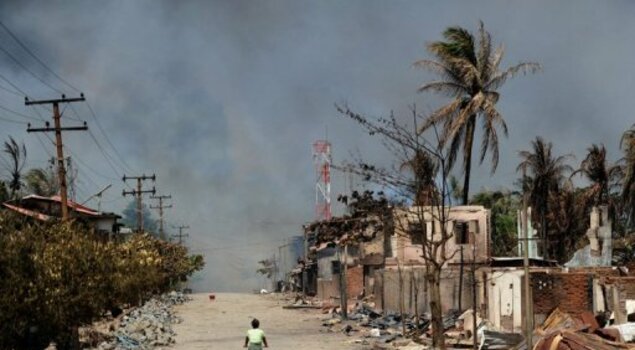
The violence in Rakhine State, which borders Bangladesh, has left 29 people dead and more than 2,500 houses burned during the past week, according to officials quoted in the Burmese news media. About 30,000 people have been displaced by the violence, according to the United Nations.

Harder to measure has been damage to Myanmar’s complex multiethnic fabric as the government of President Thein Sein tries to steer the country toward reconciliation between the military and the people, and between the Bamar majority and the dozens of smaller ethnic groups.

So far, the violence has been limited to Rakhine, which is relatively isolated from the rest of the country by a mountain range. But many among those who have posted angry comments on Internet sites have equated the Rohingya with other Muslims scattered around Myanmar. In Yangon, Myanmar’s main city, worshipers at mosques reported that prayer services left out traditional Friday sermons as a precaution against widening the sectarian conflict.

The issue of the Rohingya is so delicate that even Myanmar’s leading defender of human rights and democracy, Daw Aung San Suu Kyi, has been oblique and evasive about the situation. Asked at a news conference on Thursday whether the estimated 800,000 Rohingyas in Myanmar should be given citizenship, Ms. Aung San Suu Kyi was equivocal. “We have to be very clear about what the laws of citizenship are and who are entitled to them,” she said in Geneva, which she was visiting as part of a European tour. “All those who are entitled to citizenship should be treated as full citizens deserving all the rights that must be given to them.”

Defending the Rohingya, who are stateless and are described by the United Nations as one of the most oppressed minorities in Asia, is politically risky for both Ms. Aung San Suu Kyi and Mr. Thein Sein.

Mr. Thein Sein’s government is trying to rein in the news media to limit violence against the Rohingya. A popular publication called Hlyat Ta Pyet was banned this week for an indefinite period after it published what the government judged to be inflammatory coverage of the violence in Rakhine, said U Maung Myint, president of the Burma Media Association, which advocates media freedom.

The government has also ordered that all Rakhine-related news go through the censorship board, a rollback to the procedures during military rule. “This is the worst moment for media since the ‘civilian’ government assumed power,” Mr. Maung Myint said.

The Internet, however, has remained unfettered — and heavily tilted against the Rohingya. On Facebook and on news sites, there appeared to be very few comments this week defending the Rohingya or calling for reconciliation.

A United Nations report published in December described the Rohingya as “virtually friendless” among other ethnic groups in Myanmar. That is a polite assessment.

The source of the hatred toward the Rohingya is complex but appears to turn on religion, language, colonial resentment, nationalism and skin color.

In 2009, a Burmese diplomat who was then consul general in Hong Kong sent a letter to local newspapers and other diplomatic missions calling the Rohingya “ugly as ogres.” The diplomat, U Ye Myint Aung, compared the “dark brown” complexion of Rohingyas with the “fair and soft” skin of the majority of people in Myanmar.

The Rohingya are often called “Bengali” by their opponents in Myanmar, a term that suggests that they belong in India or Bangladesh.

Although they have been denied citizenship and are subjected to “forced labor, extortion, restriction on freedom of movement, the absence of residence rights, inequitable marriage regulations and land confiscation,” according to the United Nations, the government has allowed many of them to vote, including in the country’s first elections after military rule, in 2010.

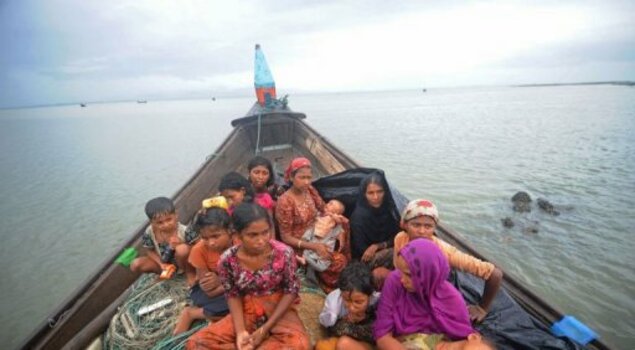
Like the Roma of Europe, they are not wanted in either Myanmar or neighboring Bangladesh. United Nations officials in Geneva said Friday that Bangladeshi border guards were pushing back boatloads of people trying to flee. The boats, laden with women, children and others wounded in the violence, have been left drifting in the broad Naf River delta between the two countries, short of food and water, said the United Nations High Commissioner for Refugees.

The provenance of the Rohingya is as difficult to trace as that of many of Myanmar’s other ethnic groups: they appear to be a mixture of Arabs, Moors, Turks, Persians, Moguls and Pathans, according to the United Nations. Myanmar’s government counts more than 130 ethnicities in the country. The Rohingya are not on that list.

Many online commentators in Myanmar have called for the expulsion of the Rohingya — or worse. When the Eleven Media Group reported Thursday that a woman’s corpse was spotted floating in a river, but did not disclose the ethnicity of the victim, one reader said he was confused. “I don’t know if I should be happy or sad,” he said, “because I don’t know what nationality she is.”

Poypiti Amatatham contributed reporting from Bangkok, and Nick Cumming-Bruce from Geneva.

The Rohingya question

An old wound in the body politic of Myanmar was reopened last week. In western Myanmar, in the state of Rakhine next to Bangladesh, a group of Muslims riding a bus were killed by a mob of Buddhists. According to news reports the killers displayed a degree of cruelty that is the usual hallmark of Myanmar's security forces. The incident was allegedly in response to the rape and murder of a Buddhist girl by three Muslim men, a few days before. The ten Muslims killed that day were beaten to death before the bus was set on fire. It did not matter to the killers that the men accused of the rape had already been arrested and were in jail.

Reactions inside Myanmar of the killing was even more startling. Comments circulated in the internet said that 'killing of the kalas is good'. The term 'kala' refers pejoratively to the dark skinned Muslims of South Asian descent known in Myanmar as the Rohingyas. It reflected their general resentment towards these Muslims.

But who exactly are these Rohingyas? Why are they the target of xenophobic elements in Myanmar society ?

Myanmar's frontier areas are inhabited by many ethnic groups. Most of such groups are recognised as citizens of that country. But there are exceptions. One of the notable one is the Rohingyas. They live along the Myanmar border with Bangladesh. These people have deep historical roots in north Rakhine (also called Arakan). Their name comes from the word 'Rohans' which was the earlier name of the Arakan. They are an ethnic mix of Bengalis, Persians, Moghuls, Turks and Pathans. Their language is part Bengali ( as spoken in Chittagong in Bangladesh) with sprinklings of Urdu, Hindi and Arabic words. The tall Arakan Yoma mountains cuts off their area from the rest of Myanmar. So for centuries they have been living isolated from the mainland. It has been so since the 7th century when they first settled there.

Indeed upto 1784, Arakan was an independent Muslim kingdom. In that year it was colonised by a Buddhist Burmese king called Bodawphaya. From that time two distinct communities started living in this 22,000 square mile territory . They were the Muslim Rohingyas and the Buddhist Maghs. When the British came in 1824 and started ruling all of Burma, they recorded that Arakan had one lakh population of which 30% were Muslims. This percentage of Muslims however increased over the years. However the British at one stage of their stay profiled the various races living in Burma. They identified a total of 135 distinct races in that country. But they had left out the Rohingyas as a separate ethnic group. This mistake made by the British is being paid ever since by the hapless Rohingyas .

After Burma got its independence from Britain in 1948, a number of Rohingyas were elected to Burma's post colonial parliament. Under their 1948 Citizenship Law, they were also made bonafide citizens of the country. It was well known that from 1961 to 1965, the Burmese Broadcasting Service also had a Rohingya language programme.

But all this began to change under the rule of General Ne Win who overturned the democratic government in a military coup in 1962. Ne Win's argument was that the ruling political party before his takeover , recognised Rohingyas as an ethnic group merely to get their votes. He therefore took away their Burmese citizenship and made them stateless. They were considered as immigrants from neighboring Bangladesh (then East Pakistan).

The army then subjected them to forced labour, expropriated their property and did extra judicial killing. They denied Rohingyas employment, access to education and trade, and also restricted their movement. Even their right to marry and to form families was subject to permission which had to be bought with high bribes from the authorities. In effect the world began to see a 'slow genocide' taking place against these people. Many of the Rohingyas in the face of persecution left their land and escaped by boats to Bangladesh. In 1978 and then again in 1991 major exodus took place.

In 1992, the United Nations General Assembly passed resolution No. 47/144 recognising the suffering of the Rohingyas in the hand of the Burmese army. About 200,000 Rohingyas had by then fled to Bangladesh. But the military government there did not take steps to bring them back to their homeland. About 28,000 of them who are registered with UNCHR are still housed in two big camps in the Cox's Bazar district of Bangladesh, after the rest left for various destinations within Bangladesh or in other countries of the region. The Myanmar (then Burmese) government has not responded to the pleas of the Bangladesh Government or the international community to take them back.

Now that there are fresh attacks on the Rohingyas across the border a new exodus is likely. Already we have seen some of these people taking small boats and crossing the Bay to reach safe haven in Bangladesh. This time our Government is discouraging their entry into Bangladesh. Our Border Guards and the Coast Guards have been alerted and under their supervision these small groups are being temporarily fed, given emergency medical treatment and sent back.

For our Government a serious moral and ethical issue is involved here. In 1971 when we were subjected to torture by the then military Government of Pakistan, we left for safe havens in neighbouring India. We were received and housed there for nine months. But in these months many of us fought a war of liberation and returned as soon we got our independence. Many people seem uncomfortable with our government dissuading the persecuted Rohingyas to go back to their homes. Even some of our international friends have been putting pressure to accept Rohingya refugees. But there is more to this than that.

In more than 21 years we have been requesting the Myanmar government to solve the Rohingya question so that these hapless people feel secure and can go back. But they have been dragging their feet. They obviously think that Bangladesh cannot but give refuge to Muslims. But the political scenario within Myanmar has changed dramatically in the past couple of years. Today under the leadership of President Thein Sein , Myanmar is moving towards a democratic system of governance. Nobel Prize winner Aung San Suu Kyi has been released from house arrest and she and her party has returned to parliament there. In this new dispensation the Rohingyas may see some positive changes .

But the timing of the riots against the Rohingyas is quite worrying. Many see this as a ploy by the entrenched military to keep Suu Kyi under political pressure. She cannot overtly support the Rohingyas for then she may lose support of Buddhists there. But she cannot at the same time afford to ignore the human rights violations of the Rohingyas. This will bring condemnation from the international community. She has therefore to find a solution to this question with the authorities there soon.

A possible way out for the Myanmar government is to repeal or amend the 1982 Burmese Citizenship Law. Translated it means that the Rohingyas should have their citizenship rights restored. Once they are recognised as citizens then they will have their basic rights.

Next month the president of Myanmar is expected to visit Dhaka. If the visit take place we must do our homework now and build international pressure on Myanmar to resolve the Rohingya question. We must insist that it would be to the mutual benefit of our two countries to have a peaceful border. But if Myanmar wants to keep this wound in their body politic festering , then we may caution them that it may take some time before a democratic Myanmar can join the comity of other democratic nations in the region if not in the world. They must resolve this sectarian issue first which has potential to spill over their borders, before they can display any democratic credentials.
The writer is a former Ambassador and is a regular commentator on contemporary issues.

Some 30,000 without food, shelter in Myanmar clashes

Rohingya refugees from Myanmar sit on a boat as they try to get into Bangladesh in Teknaf June 13, 2012. REUTERS/Andrew Biraj

SITTWE, Myanmar (Reuters) - Tens of thousands of displaced Muslim Rohingyas and ethnic Rakhine Buddhists were in need of food, water and shelter in northwestern Myanmar on Thursday after fleeing the country's worst sectarian clashes in years.

Houses were burnt down late on Wednesday in two villages near the Bangladesh border, but there were no reports of further deaths. Scores of people are feared to have been killed in the rioting that broke out in Rakhine state on June 8.

Places that were flashpoints earlier in the week, including the state capital Sittwe, were quiet as violence started to subside after days of arson attacks and killings that have presented reformist President Thein Sein with one of his biggest challenges since taking office last year.

The violence had killed 29 people as of Thursday and displaced more than 30,000, said Htein Lin, secretary of the Ministry for Border Affairs. Around 2,500 houses have been burnt down.

"Tensions between the two groups have eased. There are around 20,000 refugees in Sittwe. Most of them are from the villages where people fled in fear of the violence," Aung Myat Kyaw, a senator for Rakhine state, told Reuters.

"They are in need of food and, because of the heavy rain, there are concerns about the refugees' health and whether they have enough shelter," he added.

The army has taken hundreds of Rohingyas to Muslim villages outside Sittwe to ensure their safety.

"They are worried for their lives. The army is there so their life is secure," said Shwe Maung, a Muslim member of parliament for the ruling Union Solidarity and Development Party. "There are still so many Rohingyas in downtown Sittwe and they are afraid of being attacked."

The United Nations and a medical aid group said this week they were pulling staff out of the area because of the violence. U.N. special envoy for Myanmar, Vijay Nambiar, travelled to the area on Wednesday.

DELICATE SITUATION

Speaking at an International Labour Organization conference in Geneva, the first stop on a five-nation European tour, Myanmar Nobel laureate and opposition leader Aung San Suu Kyi expressed concern about the unrest and said laws needed to be enforced to prevent such conflicts from taking place.

"Without the rule of law, such communal strife will only continue," she told a news conference.

"The present situation will have to be handled with delicacy and sensitivity and we need the cooperation of all people concerned to rebuild the peace that we want for our country."

Food shortages could last three to four days as poor roads and infrastructure delayed supplies from aid organizations, said Htun Myit Thein of the Wan Latt Foundation, which is managing three camps that together hold about 12,000 people in Sittwe.

"The camps aren't clean enough and some of the men are getting ill," he said. "So far there is no support from the government or international groups."

It is unclear what sparked the rioting. Relations between the two communities have been uneasy for generations and tension flared last month after the gang rape and murder of a Buddhist woman that was blamed on Muslims.

That led to the killing of 10 Muslims in reprisal on June 3, when a Buddhist mob stopped a bus they were travelling on. The passengers had no connection to the murdered woman. State media said three Muslims are on trial for the woman's death.

The violence follows a year of dramatic political change after nearly 50 years of repressive military rule, which includes the release of hundreds of political prisoners and truces with ethnic minority rebels.

The government has also allowed trade unions and promised to get rid of forced labour. Recognizing this progress, the International Labour Organization lifted restrictions on Myanmar on Wednesday.

The communal violence in Rakhine state and the international reaction may prompt further change: the Rohingyas are not included among the officially recognized ethnic groups of Myanmar but Thein Sein may be forced to improve their plight.

Up to 800,000 Rohingyas live along Myanmar's border with Bangladesh in abject conditions. Neither country recognizes them as citizens and the Bangladeshi authorities have turned away boats of Rohingyas fleeing the violence this week.

Friday, 15 June 2012

United States urges Bangladesh not to send back Myanmar refugees

The US State Department has urged Bangladesh to “respect its international obligations” and allow fleeing Muslims from Myanmar to enter the country. Bangladeshi guards have turned back more that 660 Rohingya Muslims since Monday.

AP Photo/Fareed Khan
US urges Bangladesh not to send back Myanmar refugees

The United States on Wednesday voiced concern that Bangladesh was turning away Muslims fleeing religious violence in Myanmar and urged the Dhaka government not to send them back.

"We are concerned that Bangladeshi authorities appear to have intercepted and turned back persons fleeing the ethnic and religious violence in Burma," State Department spokeswoman Victoria Nuland said, using Myanmar's former name.

"We have been urging the government of Bangladesh to respect its international obligations under the relevant refugee conventions and to continue its longstanding policy of non-refoulement of refugees," she said.

Non-refoulement refers to a principle of international law that forbids turning over a victim of persecution to his or her persecutor.

Bangladeshi guards have turned back 16 boats carrying more than 660 Rohingya Muslims, most of them women and children, since Monday as they tried to enter from Myanmar across the river Naf, according to local officials.

Around 25 people have been killed and a further 41 people were wounded in five days of unrest in western Myanmar between Buddhists and Muslims.

The Rohingya are considered one of the world's most persecuted groups, with Myanmar not officially recognizing them as a minority.

Rohingya children from Myanmar sit on a boat as they try to get into Bangladesh in Teknaf

Picture loading...Rohingya children from Myanmar sit on a boat as they try to get into Bangladesh in Teknaf June 13, 2012. The UN Refugee Office (UNHCR) has called on Bangladesh to keep its borders open given the rapid escalation of violence in the northern Rakhine State of Myanmar, UN spokesman Martin Nesirky told reporters on Tuesday. REUTERS/Andrew Biraj (BANGLADESH - Tags: SOCIETY IMMIGRATION CIVIL UNREST MARITIME)
UN Envoy Visits Burma’s Stricken Rakhine State

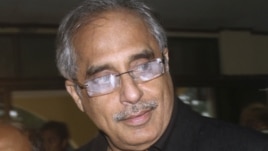
undefinedVijay Nambiar, the U.N. envoy to Burma, leaves Sittwe Airport in Burma's Rakhine state, June 14, 2012.
BANKGOK - The U.N.’s special envoy to Burma, Vijay Nambiar, returned Thursday from a visit to Burma's western Rakhine state, where sectarian violence has killed 21 people and destroyed scores of homes.

Nambiar said he spoke with people caught up in the violence who are still "in a state of shock," and unwilling to return to their homes. There has been widespread violence in the area recently between Buddhists and Muslims, who are members of the ethnic minority known as the Rohingya.

Speaking to VOA by phone from the Burmese capital, Rangoon, he said the city of Maungdaw, where the conflict erupted, is now largely calm, but that the situation in the state's capital Sittwe is still tenuous and he was unable to visit some areas. Nambiar confirmed that 21 people died in the fighting.

Nambiar praised both the Border Affairs minister who traveled with him, and President Thein Sein, who responded by sending in the military to bring the situation under control, and declaring a state of emergency he described as "prompt, firm, and sensitive."

"This is an issue which has the potential of impacting on the entire reform process and requires to be handled very sensitively and in line with the international norms of international conduct," he said.

Burmese President Thein Sein said he is committed to equal justice and the rule of law in dealing with the aftermath of the conflict, he added.

Rohingya have long been viewed by the government and most Burmese as immigrants who are not entitled to citizenship or other benefits of the state. The recent fighting has led to a rash of inflamed rhetoric on websites and in domestic media coverage against Rohingya.

Violence broke out on June 3 when a mob of Buddhists in Rakhine allegedly attacked a bus and killed 10 Rohingya passengers in apparent retaliation for an earlier rape and murder of a Buddhist woman, allegedly by three Rohingya.

It will take time to address the longstanding ethnic and sectarian tensions, said Nambiar.

"I think increasingly everybody is conscious of the need to move away from such kind of ethnic stereotypes and characterizations of this nature because they realize that that is harmful to the entire project of reform," he said. "And I think while it is true that the messages that are being purveyed by being stressed by the top leadership need to filter down to the lower levels and there is still a lot of work to be done."

U.N. refugee agency official Preeta Law, a deputy representative in Burma, warned the fighting could have an impact on the effort to resettle Rohingya refugees now living in camps across the border in Bangladesh. "Of course in a situation of this kind of violence that's happened right now, in the immediate term, this would not be something that we would be looking at at this time," Law said.

Boats carrying women and children fleeing the violence have been turned back by the Bangladeshi government, despite the agency's plea to keep their border open.


 UN envoy visits unrest-hit Myanmar
A UN envoy arrived in Myanmay after a state of emergency was declared in Rakhine state, which has seen a deadly rise in sectarian violence. Bangladesh has turned down calls from the UN refugee agency UNHCR to let in the fleeing Rohingya.
UN envoy visits unrest-hit western Myanmar
AP Photo/Fareed Khan
UN envoy visits unrest-hit western Myanmar
A top UN envoy arrived in strife-torn western Myanmar on Wednesday as security forces grappled with sectarian violence that has left dozens dead and hundreds of homes burned down.
A state of emergency has been declared in Rakhine state, which has been rocked by a wave of rioting and arson, posing a major test for the reformist government which took power last year.
A dusk-to-dawn curfew has been imposed in many areas.
Vijay Nambiar, UN chief Ban Ki-moon's special adviser on Myanmar, flew into the capital of Rakhine to visit Maungdaw, a town near the border with Bangladesh where the violence flared on Friday.
He was accompanied by Myanmar's Border Affairs Minister General Thein Htay and 15 Muslim religious leaders from Yangon.
"We're here to observe and assess how we can continue to provide support to Rakhine," Ashok Nigam, UN resident and humanitarian coordinator who was also in the group, told AFP.
An uneasy calm pervaded Sittwe, which has been rattled by gunfire in recent days and was drenched by heavy rains on Wednesday.
Local residents have been seen roaming the streets wielding knives, swords and sticks, while people from both the mainly Buddhist ethnic Rakhine and Muslim Rohingya communities have been forced to flee their homes.
The Buddhists and Rohingya have both accused each other of violent attacks.
The UN has evacuated most of its foreign staff from Maungdaw, which is its main base in the state and has a large population of stateless Rohingya Muslims.
Around 25 people have been killed and a further 41 people were wounded in five days of unrest, an official told AFP on Tuesday. He did not give details of how they died or whether they were Buddhists or Muslims.
Rohingya leaders say the real number of dead is much higher but AFP could not verify the allegation and has been unable to visit many of the affected areas for security reasons.
The toll does not include 10 Muslims who were killed on June 3 by a Buddhist mob in apparent revenge for the rape and murder of a woman, sparking the violence in Rakhine.
Rakhine, a predominantly Buddhist state bordering Bangladesh, is home to a large number of Muslims including the Rohingya, described by the United Nations as one of the world's most persecuted minorities.
The Myanmar government considers the Rohingya to be foreigners, while many citizens see them as illegal immigrants and view them with hostility, describing them as "Bengalis".
Hundreds of Rohingya, many of them women and children, have attempted to flee to Bangladesh in rickety boats in recent days, but have been turned away.
Border guards on Wednesday said they had refused entry to another three vessels, although a single six-week-old baby girl found floating alone in a boat was rescued and placed with a local family.
The Dhaka government has rebuffed international calls, including by the UN refugee agency UNHCR, to let in the fleeing Rohingya.
The United States has urged an immediate halt to the sectarian unrest.
A leader of Rohingya refugees living in Bangladesh camps appealed for help from Aung San Suu Kyi on Wednesday, accusing the democracy icon of ignoring the plight of the minority group, who the UN says has suffered decades of discrimination in Myanmar.
"Aung San Suu Kyi hasn't done or said anything for us, yet the Rohingyas including my parents campaigned for her in the 1990 elections," Mohammad Islam, of Nayapara camp in the border town of Teknaf, told AFP.
A spokesman for the opposition leader's National League for Democracy party said the former political prisoner had instructed him to work "to help both sides equally" before she left Wednesday on a historic trip to Europe.
The veteran activist, who will formally accept her 1991 Nobel Peace Prize in Oslo on Saturday, has remained largely silent on the unrest apart from calling for "sympathy for minorities", while key figures in the democratic movement have said the Rohingya are not one of Myanmar's ethnic nationalities.

Burma’s Rohingya Dilemma

Yesterday in Rangoon I witnessed firsthand the tensions that are gripping not only Arakan State but also, increasingly, other parts of Burma.

Walking around the city, I saw Buddhists and Muslims smiling as they came and went from temples and mosques that were full of people praying for peace. At the same time, however, I noticed that police had been deployed near Shwedagon and Sule pagodas, the city’s most famous religious shrines.

Beneath its calm exterior, Rangoon seems to be bracing for an outbreak of sectarian conflict. The question on everyone’s lips is whether the violence in Arakan State will spread to Burma’s largest city, which is home to people of many faiths, including Buddhists, Muslims and Hindus.
Aung Zaw is founder and editor of the Irrawaddy magazine. He can be reached at aungzaw@irrawaddy.org.

One man I spoke to, a businessman, said that he has enough food and water in his house to last a month—just in case. He even confided that his stockpile included weapons.

But even as fear of religious conflict grips the city, there are many who insist that the situation in Arakan State is not really about religion at all. One prominent public figure taking this position is Ko Ko Gyi, the 88 Generation leader who last week declared that the “Rohingya issue”—that is, the status of Arakan State’s Muslim minority—is essentially a matter of sovereignty.

When I asked him what he meant by this, he said that it wasn’t for other countries to decide who qualifies to be recognized as a citizen of Burma. He said he sympathized with the Rohingya, many of whom have suffered as refugees in other countries, but added that they still could not be considered one of Burma’s 135 ethnic groups.

Some non-Burmese have reacted to Ko Ko Gyi’s remarks with a certain amount of consternation, believing that he, as a former political prisoner, should have stood up for the rights of an undeniably oppressed group. But inside Burma, his words were welcomed and spread quickly on Facebook, while local journals that reported his views soon sold out. The consensus among Burmese, it seems, is that the Rohingya are illegal migrants from neighboring Bangladesh—a view that also treats this as an issue of sovereignty rather than religious animosity.

Indeed, many—especially ethnic Arakanese—have been resentful of the portrayal of this as a religious conflict, even though many have resorted to racial and religious slurs in their verbal attacks on the “Bengalis,” as they prefer to call the Rohingya.

The Arakanese are fiercely proud of their ethnic identity, even drawing a strong line between themselves and their fellow Buddhists, the ethnic Burman majority. In the minds of many Arakanese, then, this is a struggle to preserve that identity. They believe that if they don’t push back against the Rohingya, their own culture will be threatened by an influx of “aliens” from a country many times more populous than their own homeland.

For other observers, however, the concerns are very different, but no less pressing. Tin Oo, a veteran leader of the opposition National League for Democracy, which just months ago finally joined the government-led reform process by entering Parliament, told me he worried that the violence in Arakan State could delay this delicate transition to a more democratic form of governance.

As a former commander-in-chief of Burma’s armed forces who was once posted in Arakan State, Tin Oo said that the region has always had the potential to become a breeding ground for sectarian violence. If it finally realizes that potential now, it could be a serious setback for those arguing for the need to open the country further, he said.

So far, President Thein Sein has handled the situation in Arakan State carefully, imposing a state of military emergency under Section 413 of the country’s 2008 Constitution—the first since his government came into power last year—but also urging all sides to set aside their differences in a television address to the country.

“If we stick to endless hatred and revenge by killing each other, it’s possible that the danger will be more widespread, not only in Arakan State,” warned Thein Sein, adding that the country’s “fledgling democracy” could easily become a casualty of the violence.

I happened to be with a group of former generals during the broadcast of Thein Sein’s speech, but it was difficult to know what they thought about the issue. One who was sitting next to me signaled his agreement with the president’s words, but then fell silent, as if resigned to the cycle of violence that seems to fuel conflict after conflict in the country.

Many people I spoke with agreed that this was a major challenge for Thein Sein. “It’s not going to be an easy ride,” said one diplomat.

While it was still far from clear how this situation would turn out for the president, some observers seemed relieved when he allowed senior UN officials to visit Arakan State—in marked contrast to the former regime’s instinctive impulse to hide the country’s dirty laundry from the eyes of outsiders.

Some long-time political observers whispered, however, that hardline elements within the military may have had a hand in the violence, though they could offer no hard evidence. Others said that the army wanted to launch a military operation to drive out the Rohingya, but the president did not give the green light.

In an effort to increase transparency, last week the government formed a committee to investigate the rape and murder of an ethnic Arakanese woman that sparked the violence, as well as the lynching of a group of Muslims that led to a series of attacks and counterattacks by Rohingya and Arakanese mobs.

While many educated Burmese saw this as a step in the right direction, on the streets, popular opinion was more in favor of taking a hard line against the Rohingya.

Many decried the corruption of immigration officials, who they blamed for letting the “Bengalis” into the country in the first place. One wealthy businessman, who had hastily raised a large amount of money to donate to Arakanese displaced by the violence, even suggested building a strong fence to defend the country from further incursions.

Even a veteran political activist bristled when he heard that the US had expressed concern over the Rohingya issue. “I want to know how the US handles its border with Mexico and how they treated Muslims after 9/11,” he said angrily.

In the absence of any hard information about what is actually happening in Arakan State right now—due, in part, to government efforts to rein in “irresponsible” media—and the lack of a healthy, rational debate on the status of the Rohingya, it seems unlikely that the situation there will improve anytime soon. And that’s bad news for everybody.

Rohingya from Myamnar rally near Myanmar Embassy in Kuala Lumpur

An ethnic Rohingya from Myanmar and living in Malaysia holds a placard during a rally near the Myanmar embassy in Kuala Lumpur June 15, 2012. — Reuters pic


An ethnic Rohingya from Myanmar and living in Malaysia, holds a placard during a rally calling for a stop to the killings and violence toward the Muslim Rohingyas in Myanmar, near the Myanmar embassy in Kuala Lumpur June 15, 2012. Thousands of displaced Muslim Rohingyas and ethnic Rakhine Buddhists were in need of food, water and shelter in northwestern Myanmar on Thursday after fleeing the country's worst sectarian clashes in years. Houses were burnt down late on Wednesday in two villages near the Bangladesh border, but there were no reports of further deaths. Scores of people are feared to have died in the rioting that broke out in Rakhine state on June 8. REUTERS/Samsul Said (MALAYSIA - Tags: CIVIL UNREST CONFLICT)

About Me

My photo
Maung daw, Arakan state, Myanmar (Burma)
I am an independent man who voted to humanitarian aid.